
dIf you’re buying a home in Honolulu with a pool, a standard home inspection will not tell you what you need to know about that pool. Real estate professionals across Oahu routinely recommend separate, dedicated homebuyer pool inspection in Honolulu, and for good reason.
A pool is one of the most expensive systems on any residential property, and none of those problems show up reliably in a general home inspection report.
At Windward Pool and Spa, we provide detailed pool inspections for homebuyers, realtors, and property managers across Oahu. We check every system, surface, and safety feature, and we give you a clear written report before you close.
Why a Standard Home Inspection Does Not Cover Your Pool in Hawaii
General home inspectors are trained to assess the overall condition of a residential property. What they are not trained to do is evaluate pool-specific issues with the precision the job demands.
In Hawaii, your Purchase Contract includes a J-1 inspection period, typically the first 10 to 20 days after your offer is accepted. That window exists for due diligence, and it’s the right time to order a dedicated pool inspection. If you let that window close without one, you lose your primary leverage to negotiate repairs or credits.
The financial stakes are real. Buyers who skip a professional pool inspection on Oahu regularly close on homes with significant pool problems they didn’t know about, problems that belonged to the seller but became their responsibility at closing.
What a General Home Inspector Misses on a Pool
A generalist home inspector does a visual scan of visible components. A pool specialist looks for things that a visual scan misses entirely.
The difference matters most on Oahu because Hawaii’s coastal environment accelerates pool wear in specific ways. A home inspector looking at a pool in Kahala or Diamond Head may note that the water is clear and the pump is running. A pool specialist looks at the plaster surface closely, checks tile integrity by tapping for hollow spots that signal delamination, examines the equipment for early salt air corrosion, and evaluates whether the automation controls are functioning properly.
Structural cracks in a pool shell are different from the surface crazing you see in older plaster, and a generalist inspector typically cannot tell them apart. Unexplained wet areas near the pool deck can indicate an underground plumbing leak. Faded or brittle rubber gaskets and O-rings can signal equipment that’s nearing the end of its life.
Every one of those findings, identified during your inspection period, gives you something to work with in the negotiation. Identified after closing, they’re yours to pay for.
What a Homebuyer Pool Inspection in Honolulu Covers
At Windward Pool and Spa, we evaluate six major areas during every pre-purchase homebuyer pool inspection in Honolulu.
The first is the pool shell itself. We examine the plaster, pebble, or fiberglass surface for cracks, pitting, staining, and deterioration. We assess tile and coping for loose or cracked sections and check for hollow spots that indicate delamination.
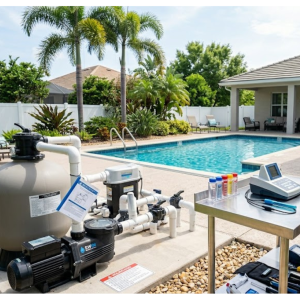
The second is pool equipment. We test pumps, filters, and heaters for proper operation. We review plumbing and electrical systems for condition and code compliance.
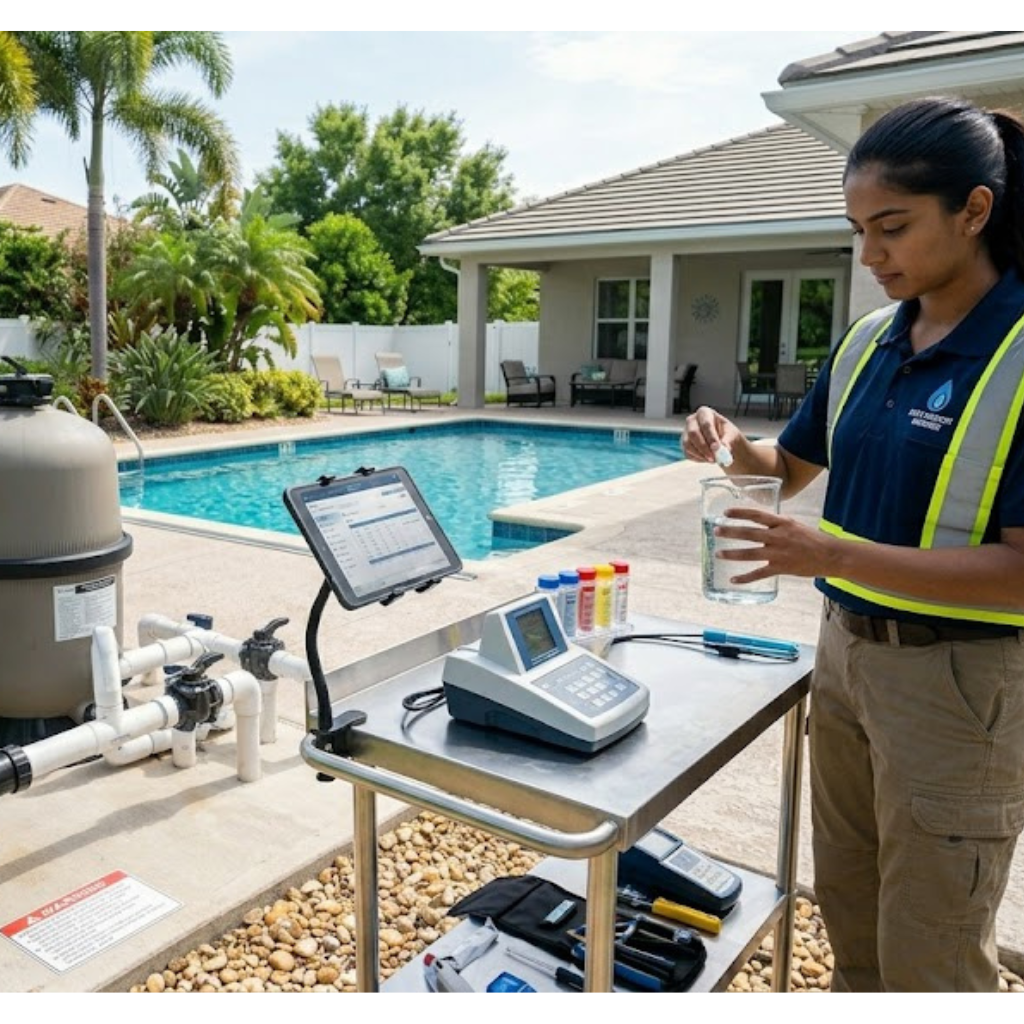
The third is water quality and sanitation. We test the chemical balance and evaluate the sanitation system, whether your pool uses chlorine, a salt cell, or UV purification.
The fourth is automation and controls. We test control panels, timers, and smart features to confirm they respond correctly. If the system is outdated or nonfunctional, we document it clearly.
The fifth is pool safety compliance. We check fencing and gate hardware to confirm it meets self-closing and self-latching requirements, inspect drain covers for anti-entrapment compliance, and look for deck slip hazards.
The sixth is overall condition and maintenance history. We note visible signs of deferred maintenance, corrosion, or equipment wear that suggest the pool has not been consistently cared for.
After the inspection, you receive a written report that spells out exactly what we found, how serious each issue is, and what we recommend as next steps.
When to Order Your Honolulu Homebuyer Pool Inspection
Timing matters in Hawaii real estate. Your J-1 inspection period is the window you have to complete due diligence, and it moves fast.
Schedule your homebuyer pool inspection in Honolulu as early as possible in that period. The inspection itself takes one to two hours depending on pool size and features. The written report follows after that. You need time to review the findings and, if necessary, go back to the seller with a request for pool repairs, credits, or a price adjustment before the inspection deadline.
In Hawaii, most homes sell as-is. That designation does not remove your right to ask for concessions during the J-1 period. What it signals is that the seller prefers not to do minor cosmetic repairs. If your inspection turns up a failing pump, evidence of an underground leak, or non-compliant pool fencing, you retain the right to negotiate, to ask for credits at closing, or to exit the contract if you and the seller cannot reach an agreement.
Windward Pool and Spa serves homebuyers, realtors, and property managers across Honolulu, Kailua, Kaneohe, Kahala, Aina Haina, Hawaii Kai, and Lanikai. We understand that inspection timelines are tight, and we schedule accordingly.
What the Inspection Report Tells You and How to Use It
Your pool inspection report is a practical document. It tells you the condition of every system and surface we evaluated, identifies any problems found, notes the urgency of each finding, and gives you recommended next steps.
Three broad outcomes are possible.
The pool is in good condition with only routine maintenance needed. That’s a positive finding. It means the pool is a genuine asset to the property, not a liability waiting to surface.
The pool has moderate issues, things like aging equipment, minor plaster wear, or a compliance gap in the fencing. These are typically negotiable. You can ask the seller for a credit toward repairs, have the seller address specific items before closing, or factor the repair cost into your offer price.
The pool has major problems: structural failure, active leaks, non-functional equipment, or significant deferred maintenance. These findings require serious negotiation, and in some cases they may change how you think about the purchase entirely. A detailed inspection report gives you the documentation you need to have that conversation with confidence.
Pool Issues That Can Be Negotiated During Escrow in Hawaii
Certain pool defects consistently come up in pre-purchase inspections across Oahu and are worth knowing about before you go into escrow.
Plaster that’s nearing the end of its life, typically after 8 to 12 years in Hawaii’s conditions, means a resurfacing bill is likely within a few years of purchase. That’s a legitimate cost to negotiate into the price.
A pump, filter, or heater that’s showing signs of failure or is already past its expected service life represents real near-term expense. Salt cell failure in saltwater pools is another common finding.
Safety compliance gaps, like a gate that doesn’t self-latch properly or drain covers that don’t meet current anti-entrapment standards, are correctable but add to the cost of bringing the pool up to code.
Underground plumbing leaks are the most costly finding and the hardest to anticipate without a professional inspection. Detection alone can cost several hundred dollars, and repair costs vary widely depending on location and severity.
Why Windward Pool and Spa Is the Right Choice for Your Pre-Purchase Pool Inspection
Windward Pool and Spa serves homebuyers, realtors, and property managers with professional pool inspections across Oahu. We also offer pool cleaning, repairs and maintenance services in Honolulu and across Oahu We inspect every system, surface, and safety feature. We provide written reports that are detailed, clear, and easy to act on. And we understand the specific conditions Hawaii’s coastal, tropical environment creates for pools.
We’ve worked with pools across Honolulu, Kailua, Kaneohe, Kahala, Aina Haina, Hawaii Kai, and Lanikai. We know what salt air does to equipment in Portlock. And we know how UV exposure affects plaster timelines on the North Shore. We know what to look for, and we know how to explain it to you clearly.
If you’re buying a property with a pool on Oahu, contact us to schedule your inspection before your J-1 deadline.